Nomadland (-)
Miserabilism has historically been an effect or affect of cinema and documentary modes of filmmaking which frequently lingers between emotional reasonances and manipulation. Look for instance the early British documentary features of John Grierson, or the subsequent slice-of-life films that manage to encapsulate an essence of life on screen. Interacting with the real can sometimes become too negotiable for its own sake.
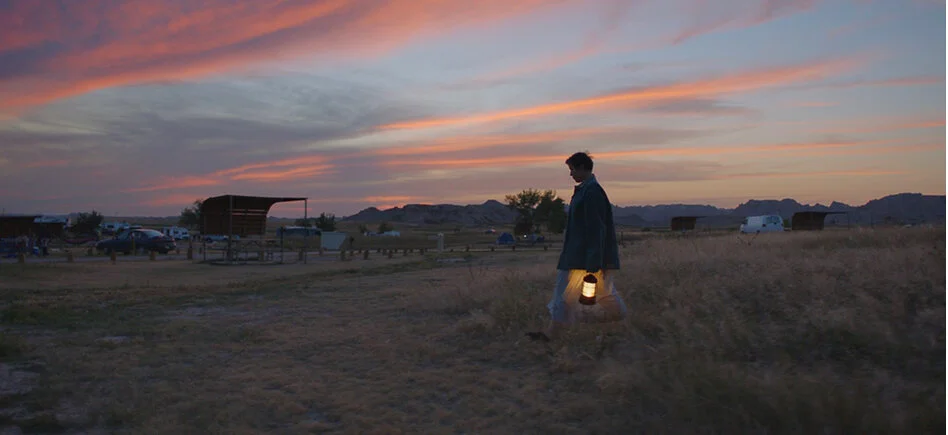
In Chloe Zao’s oeuvre, dealing with the real comes from within. The terms of sound and vision are exquisite tools, used exquisitely. Nomadland comes in fierce comparison with the director’s previous effort with The Rider, a wonderful ride of internal conflicts of masculinity in West(ern) US, whereas this attempt chooses to place itself in a specific time and place which is connoted an importance worth examining. What is of interest here is the reception of such text from an audience still living in a Western society, thus not one associated with the North American esteem. Undoubtedly, the 2008 crisis reverberated throughout the globe, something inescapable under the capitalist regime. In Europe, this is something still felt in many places. This story is set on 2011, following a woman partaking the role and rules of nomad(hood)
Complications stemming from the actual setting and premise of this work, be it the mixture of Frances McDormand and David Strathairn with non-actors, the improvisational tone, the focus on labour and mental health, is mostly dealt wonderfully, especially experiencing McDormand’s (the actor’s) ability to listen. It blurs the lines between reality and fiction when you think how McDormand plays a character who never was able to listen to her world around her, and now is enabled to do so, when the actual actor’s work mostly stems from her ability to let others talk. Sound - of voices and spaces - comes in direct parallel with vision, specifically of what lies down the line for the working class subject, of the next van journey of the Nomad, or the metaphysical implications when connecting with soil in such a delicate manner. We should recognize all those qualities in Zao’s work, insofar we are open to do so. Unlike The Rider, this film requires us to follow a woman who throughout her journey remains without a dramatic conflict or, more-or-less, stakes. If Zao and McDormand suggest that what this is about is the line between the Home and the House, then I would say that we are more stuck on the latter. How do we feel as story-readers about a low-middle class woman being on the run, until her money runs out and goes back to the stigmatized sanctuary of the privilege to ask for more? These are more than welcome inquiries this piece manages to excavate, insofar, once again, we are open to welcome them ourselves. If you ask me, I would be much more interested in the notion of the Pioneering nature of Nomadhood in modern societies, especially blending it with a pinch of reality, be it racial plurality (this film is composed from a specific Nomad group of white people, no harm with that), and understanding of the movements itself on a deeper level. That said, what Zao achieves here is magnificent in its intentions and affect.
Escapism is something to behold, and with Nomadland, this is something not fully achieved (as expected) We have to embrace filmmaking of this kind, since it is an acknowledgement to different kinds of roots we so much need. And on the next journey, I will still be there.