For Heaven’s Sake | Mini-Series (64)
Two Canadians in their early 30s and a dead body, or for the sake of clarity, Comedy Central sensibilities meeting the true-crime canon. What we eventually get here is a reminder that even in a writers’ block, the outcome can be pretty beneficial.
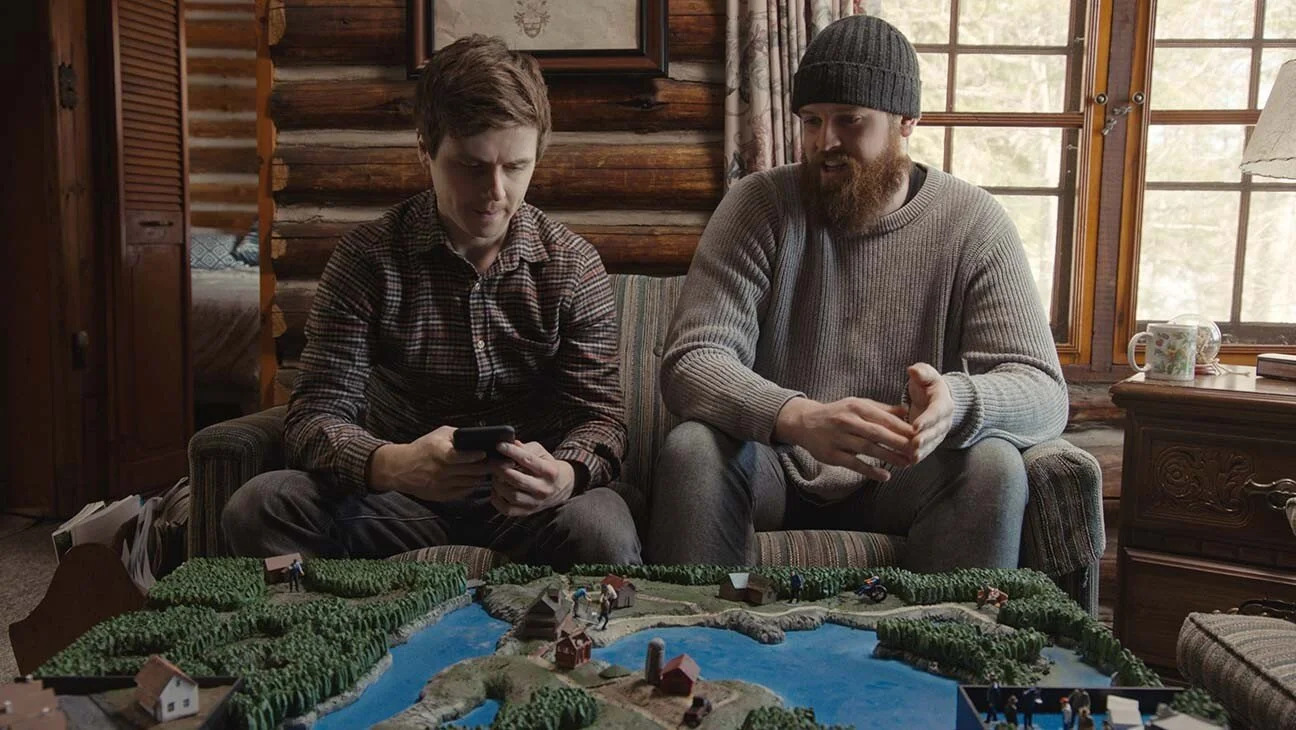
The story revolves around the search for Harold Heaven, who mysteriously disappeared from his remote cabin in Ontario, Canada, in the winter of 1934. Mike, one of the two investigators, happens to be a family member and what is laid out for the subsequent 6 hours in episodic format is an introspection of identity mainly based on hearsay. We are here as viewers in the common position of consumption, one that is motivated by the thrill of a mystery, as the usual excitement of the true-crime genre is used here in a self-reflective way. Whoever was lucky or informed enough to have seen the little-lived show American Vandal (2017-2018) can quickly recognise the machinations at play here, from the stranger than fiction main story to blurring the lines of what’s real or not. Those stories, I feel, work well as a stethoscope of mainstream culture, especially when you add the inquiries and conscious choices made by the subjects involved; here we have a clear consequential progression of events in the actual search of a potentially dead body, 85 years after the event itself. Two young people in distress, going further down into their obsession - they, most likely, intentionally put themselves into the shoes of an ongoing cultural quest for the truth which will nurture the need for completion.
Despite its not-so-original trajectory, for which we clearly have encountered several works prior to this, For Heaven’s Sake surpasses many of them in its unexpected emotional core; along those semi-comedic and dull moments of inquiry for the unattainable truth, we are in the privileged and sometimes voyeuristic position of sensing all vulnerabilities at play, and maybe identifying the importance of narrative in our lives in an imbedding crisis of identity. This is a story of a closeted homosexual man in the 1930s which very likely led to a crime of hatred that sheds a (not unexpectedly) light into the Depression-era life of the past. Of course, in an era of another kind of depression, what this story reveals is the dependance to a past that defines our present; what a better role to partake than that of the storyteller, then.