I May Destroy You | Mini-Series (95)
A Mother weeps.
A search jor Justice ensues
as she has disappeared again;
a place unknown.
A Mother weeps.
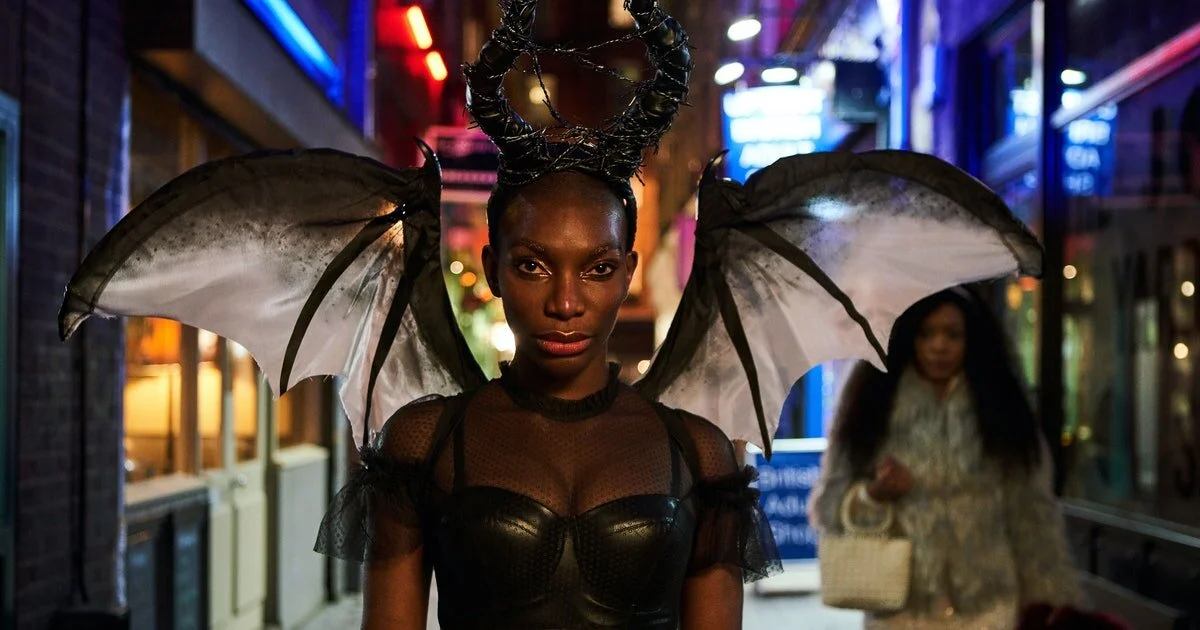
Currently the crown of BBC, the mighty Michaela Coel, can be viewed as the voice of the Voiceless, or even more appropriately, a voice deeply needed and coming from deep inside. In her recent interview with documentarian and author Louis Theroux (https://www.bbc.co.uk/programmes/p08ybstk, unmissable, really) she invites us into the journey of her origin which is still a continuous quest for her. With working class roots and a Ghanian descent, Coel surely never fails to acknowledge her history which is nonetheless complementary to her work.
In early 2016 I was able and lucky to have encountered the little-known Channel 4 show called Chewing Gum, an examination of the absurd nature of identity and faith, where Coel’s sensibilities hit a spot of rawness unlike anything we have recently seen from British television; it is the case that slick dramaturgy stemming from the UK is defined by the likes of Downton Abbey, whereas the other side of the coin managed to uphold the realist tradition at play, yet it is only the most recent push coming from BFI and… life changes (prelude of Brexit) in general that brought upon a proper return to the social realist roots of the margin, be it the working class subject or - even more importantly and under-represented here - the racial tension.
Coel’s worldview seems to me to be an omnipresent one; coming from a sociological educational background, relevant academic debates can be detected in her work, be it the theory of sadism, black history, sexual orientation, or even some more modernist ideas through a point of view that’s not yet commodified. Coel’s rejection of the imbedding Netflix deal for I May Destroy You seems fittingly relevant to the way the story was told which in my book might constitute the first masterpiece of this decade.
Offering this piece to a world suffering from the ongoing tribulations from COVID-19 might be seen as a necessary evil, especially considering how triggering the topics might be; Coel herself admitted how difficult it is to let go of your own worldview, one moment believing you are totally in sync with how the world works, a fleeting second later though feeling insecure about the safety of everyone around you, including yourself. The story here touches upon rape and consent in mainstream culture in general, yet what this work manages to achieve cannot be defined by a single topic or genre. Arabella, the protagonist of the fictional story, works as a vessel - nonetheless one that is certainly alive with a vibrant heartbeat - utilizing the narrative, its conflicts and dramatic turns, ultimately offering modes of introspection in the viewing experience. As a cinematic text, it surpasses identification by psychologizing its subject to the point of transformation, thus we could argue that the meta-text becomes a healing tool for us as well. As a literary text, it’s a historical landmark of British dramaturgy never seen before - since, let’s admit it, British television and/or cinema never really dealt with its own history and shortcomings to begin with - sprawling over the class struggle of its individuals, colonialism disguised as trauma, and insomuch as we read the story as a prescient look in modern western society, a distressing parallel of transgenerational struggle.
BBC clearly backed this project up properly and the HBO brand only helps it to reach as much audience as it possibly can. It is certain that there are several interpretations as to the trajectory of the storytelling, especially considering the amount of time we are allowed to spend with the characters. And what those characters give us back wholeheartedly is an indelible experience destined to haunt us.